The Versatility of Leprechaun Southernwood
February 16th, 2026
How a respected landscape design firm has embraced this problem-solving plant
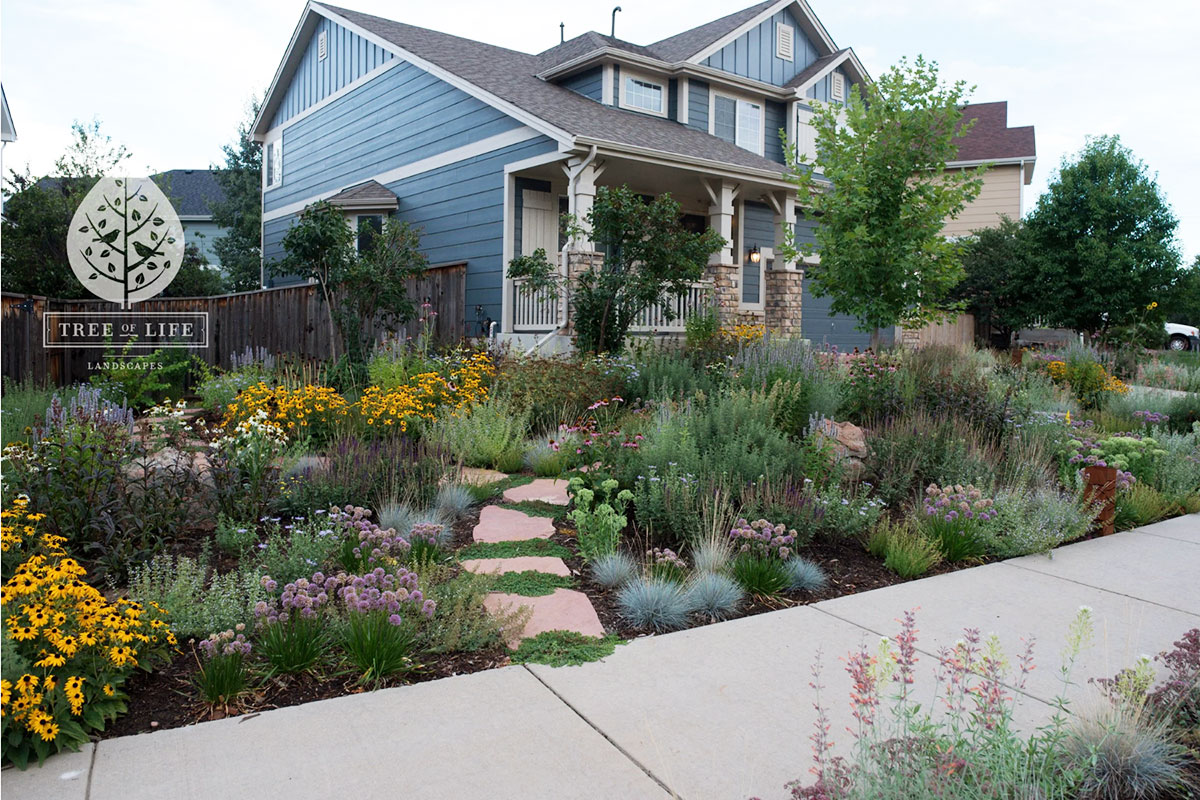
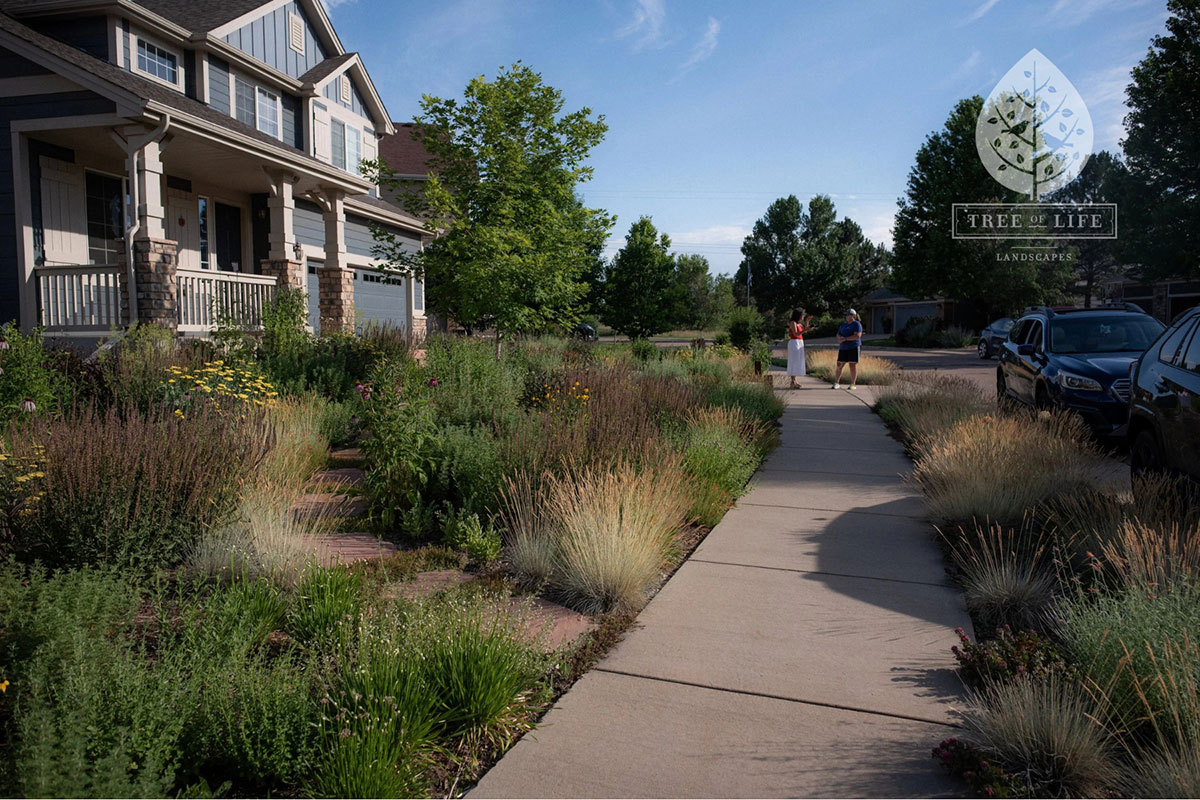
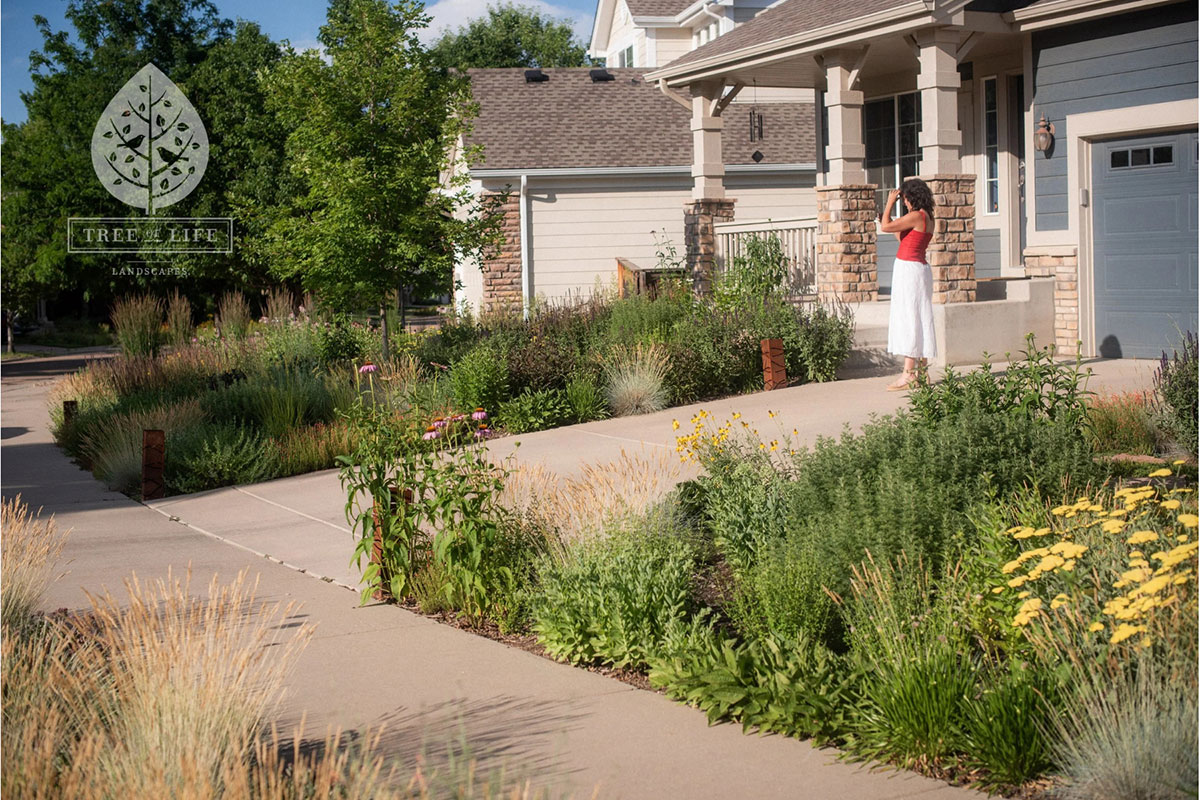
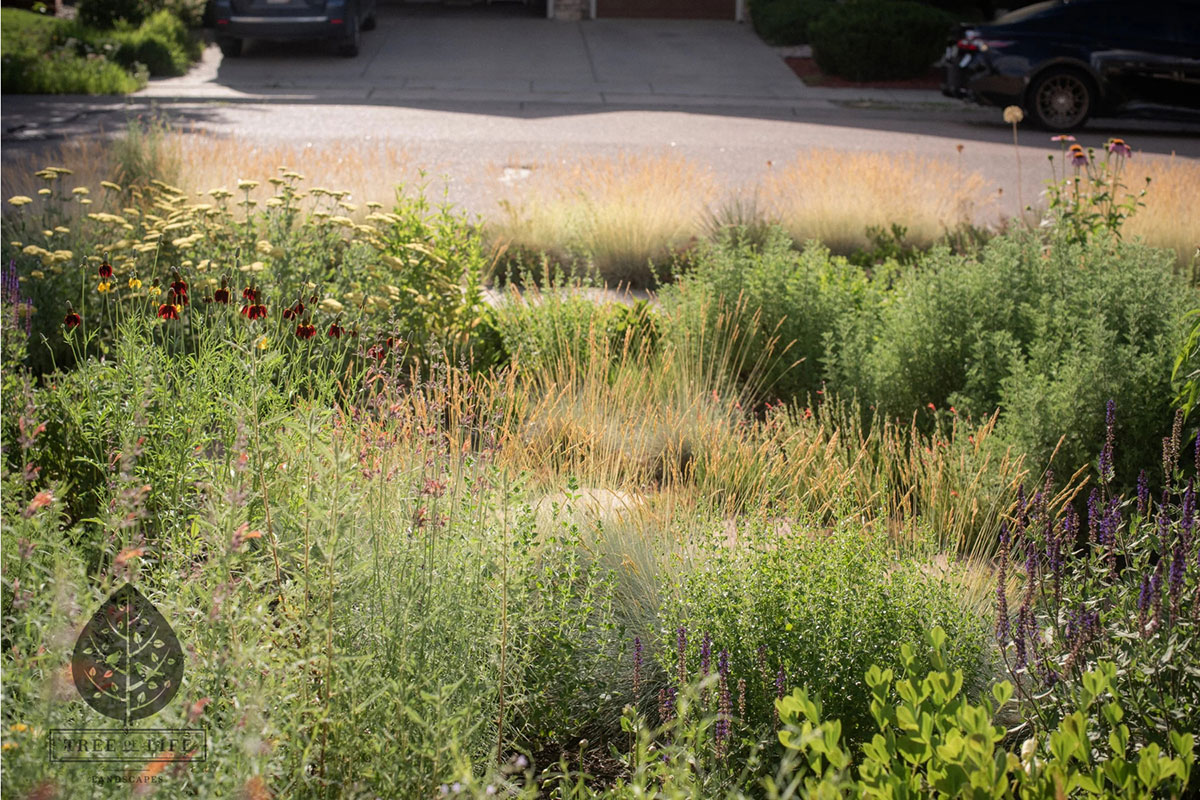
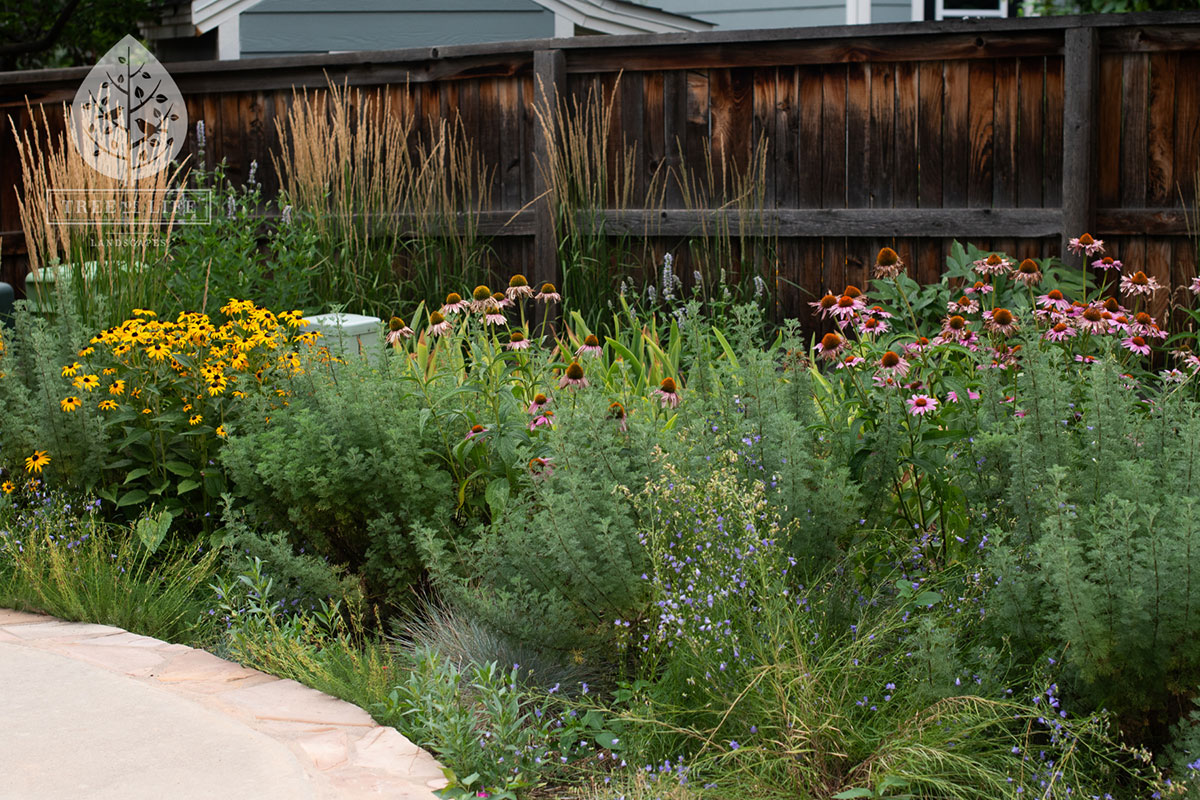
Leprechaun southernwood—a green Artemisia—in a suburban xeriscape. All images and video courtesy of Tree of Life Landscapes.
Imagine this…
You’ve been asked to create a landscape design for a mid-rise building in a historic, city neighborhood. Your project has a north-facing exposure on a tree-lined street. There is some morning sunlight during some parts of the year, but your site battles ever-changing shadows from nearby buildings and mature trees.
Your soil is stubborn western clay. (Always fun!) And your client would like a landscape that uses less water and looks attractive across seasons.
Where do you begin?
Which plant do you choose as the core of your plant palette?
These are questions that Emily Maeda and her team at Tree of Life Landscapes faced while they were planning a commercial landscape design in Denver’s historic Cheesman Park neighborhood.
Transforming a shadier landscape
Emily often uses ornamental grasses as the foundation of her landscape designs, but many low-water grasses can struggle in shady, downtown conditions.
She thought back to a vibrant green sub-shrub she’d noticed at the Colorado State University trial gardens: Leprechaun southernwood (Artemisia abrotanum ‘Leprechaun’) from Plant Select. This plant had stuck in her mind.
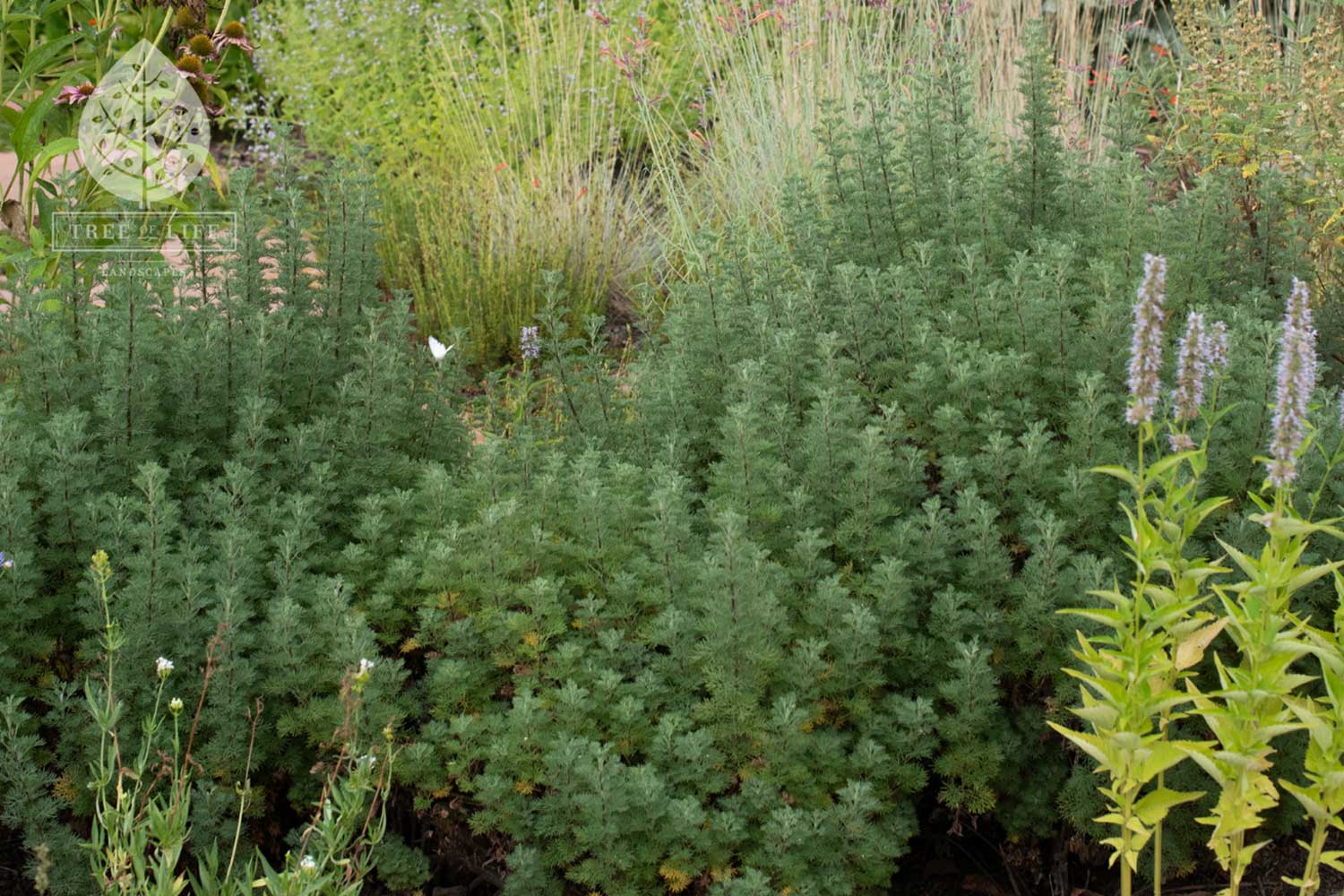
“We get excited about plants with unusual forms, unusual textures,” Emily explains. “We also love plants that really solve a problem.”
And Leprechaun southernwood is a problem solver. It’s “very, very green” during summer, but it also “looks awesome” in the winter, keeping its form for a long time. It greens up relatively early in the spring. It has an interesting texture. It’s more compact than other forms of Artemisia. And bonus, it can grow well in shade, as well as sun.
It seemed like a natural fit for this mixed light, low-water project.
Emily used Leprechaun southernwood as the core plant in her matrix design. Leprechaun southernwood “is the glue that holds everything together,” Emily says, and it’s filled out beautifully.
If you’re new to matrix plantings, they are dense, naturalistic plantings in which you cover the entire space with plants. (No open ground!) You also group and categorize plants differently than traditional design.
For example, there’s typically a base layer (aka, a matrix layer) of green, gray or powder blue plants—like ornamental grasses or Artemisia—that provide a backdrop for other plants.
“From a design perspective,” Emily shares, “having the relief of green, gray or powder blue allows other plants to be shown off in a new way.”
Emily liked that Leprechaun southernwood had a nice, tight, uniform shape—”like a western boxwood”—when it was hedged back in the spring. It solved the shade problem “very well.” And it has paired beautifully with MONGOLIAN BELLS® clematis, Agastache ‘Blue Fortune’ and Penstemon ‘Huskers Red’ in the finished landscape.
Reimagining a full-sun, suburban yard (with a client who doesn’t love grasses)
Emily and her team were asked to transform a full-sun, suburban yard into a low-water oasis.
The catch?
The homeowner didn’t love ornamental grasses.
So instead, Emily selected Leprechaun southernwood to offer stability, visual relief and a backdrop for flowering plants. She paired Leprechaun southernwood with Allium ‘Millenium,’ Echinacea (purple coneflower), Rudbeckia (black-eyed Susans) and Salvia plants.
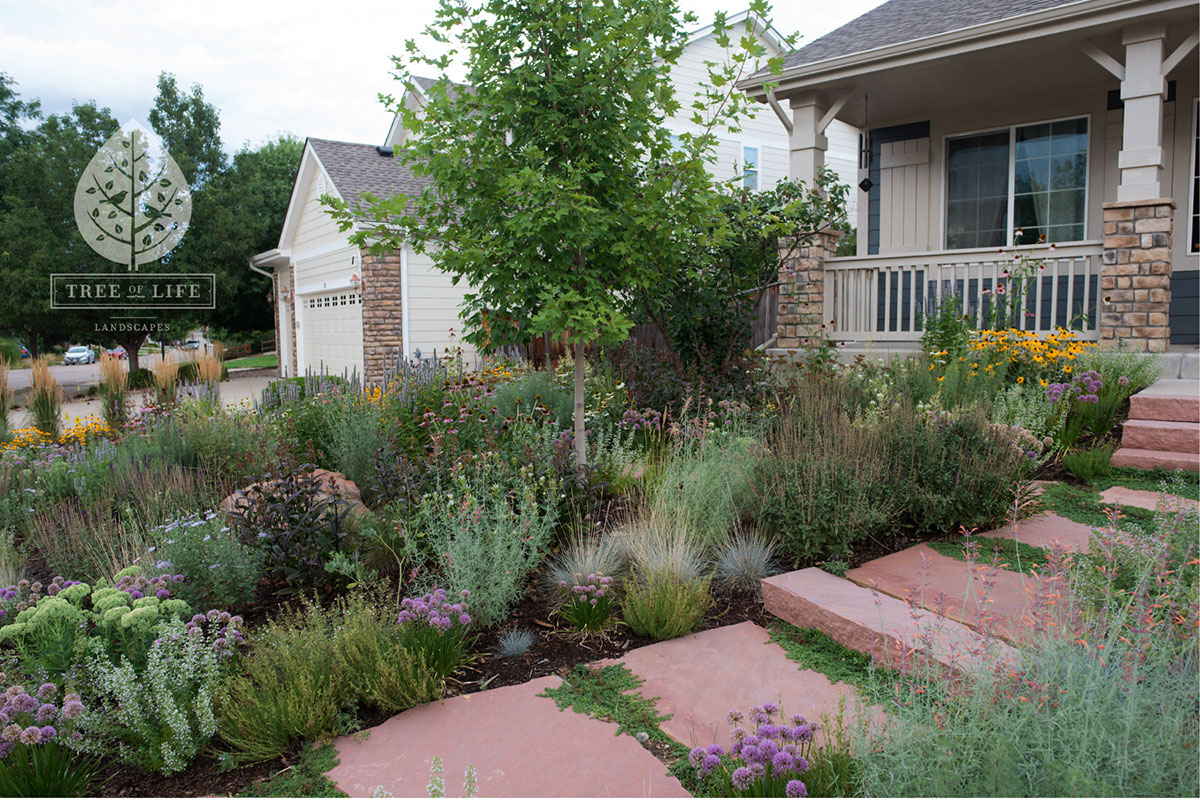
Emily’s client lives near an open space, so animals of different sizes meander through yards, munching on plants. The critters have left Leprechaun southernwood alone.
This residential landscape is highly xeric, only getting watered about four times per year.
A key lesson learned
Emily’s team did have a key learning on this project.
If you don’t cut Leprechaun southernwood back in late winter or early spring, it grows bigger and, as Emily says, “It can get a bit range-y”.
She recommends cutting the plant back to about one-third its height before it wakes up in the spring. This encourages bright green growth and helps manage the plant’s size. A once-a-year cutback is the only maintenance that Leprechaun southernwood needs.
“So many of the Artemisia are silver, which I do love,” Emily observes, “but finding something that’s vibrant green is unusual. Artemisia ‘Leprechaun’allows other plants to be shown off in a new way.”
Thanks to Tree of Life Landscapes!
Our thanks to Emily Maeda and Tree of Life Landscapes for sharing these beautiful landscape stories and photos!
Tree of Life Landscapes hosts their annual Create Beauty Design Conference in the late winter, showcasing leading voices and ideas in landscape design and horticulture.
For information on the conference, please click below.
Learn about the Create Beauty Design Conference >
Similar articles that may interest you
- Success story: Creating a pollinator garden in a suburban office park
- Success story: Creating a xeric garden in a traditional HOA
- Success story: Creating a waterwise garden in Denver’s urban corridor