2 Ways to Create a Smarter Landscape for Drought
June 23rd, 2026
Removing all vegetation is not the solution!
Replacing traditional lawns with a barren yard of rocks or artificial turf is not the answer to drought.
Plants play a critical role in our landscapes, from improving our health and well-being, to boosting property values, to offering a wide range of environmental and economic benefits.
Here are two things you can do to create a smarter, more water efficient landscape for heat and drought.
1) Water wisely
A big piece of the landscape puzzle that often gets missed is irrigating landscapes efficiently.
Here are some great places to start:
- Run a quick water audit to find out where your irrigation isn’t working well. The Colorado State University Extension has helpful tips on how to do a quick water audit of your lawn yourself.
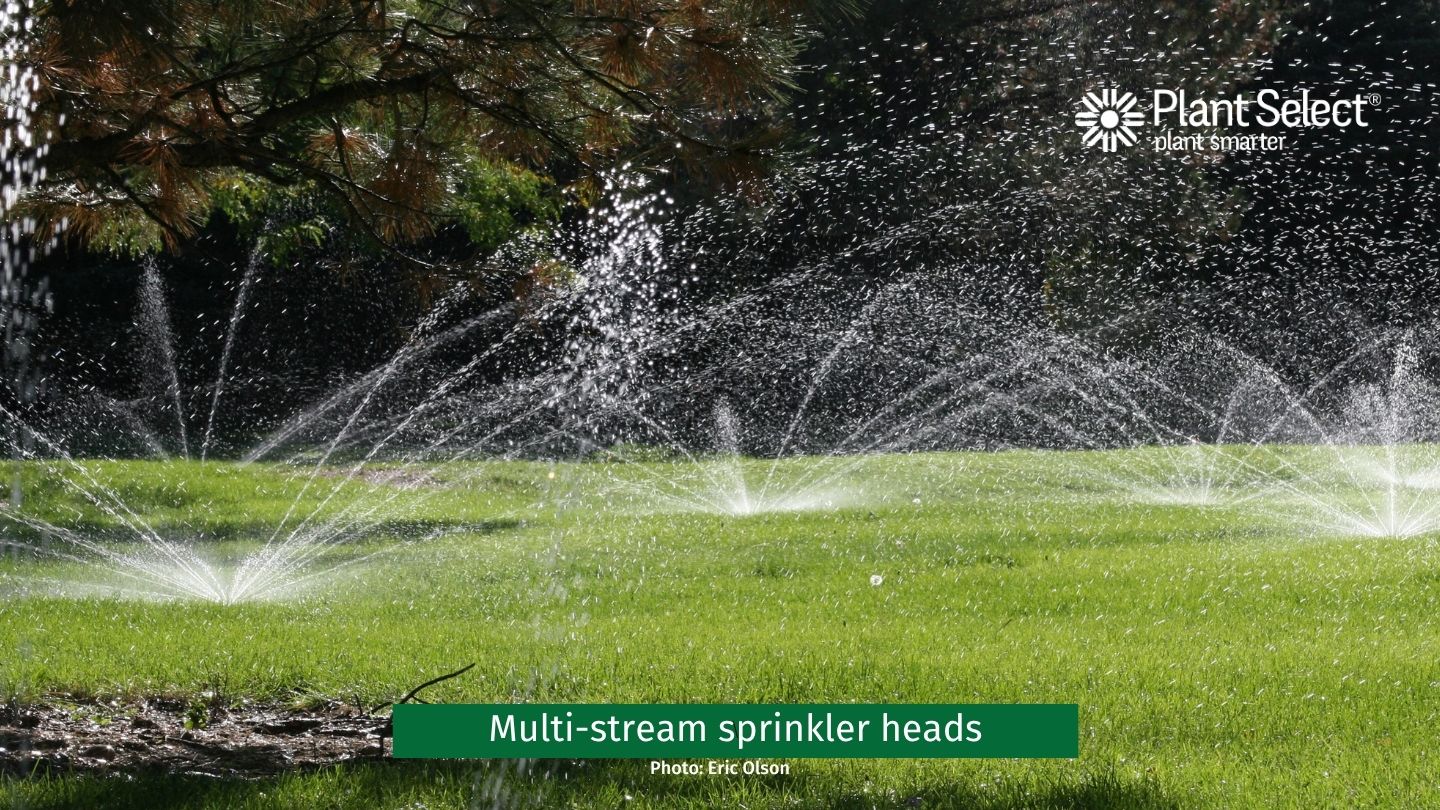
- Take advantage of efficient irrigation devices, such as multi-stream irrigation nozzles (they’re like little Bellagio fountains!), smart controllers, rain sensors, soil sensors, and/or drip irrigation. These irrigation devices waste less water than traditional devices, and many cities offer rebate programs for implementing them. Check with your city and water district to see if they offer any irrigation incentive programs.
- Follow irrigation best practices, such as watering between 9 pm and 9 am to reduce water loss from evaporation. Here are helpful irrigation best practices from Colorado State University.
- Prioritize your trees for irrigation. Trees are a long-term investment, and they offer significant value in our landscapes. The Colorado State Forest Service has helpful tips on how to keep trees healthy during drought. (Their drought map is from a previous year, but their tips are still timely.)
2) Plant smarter®
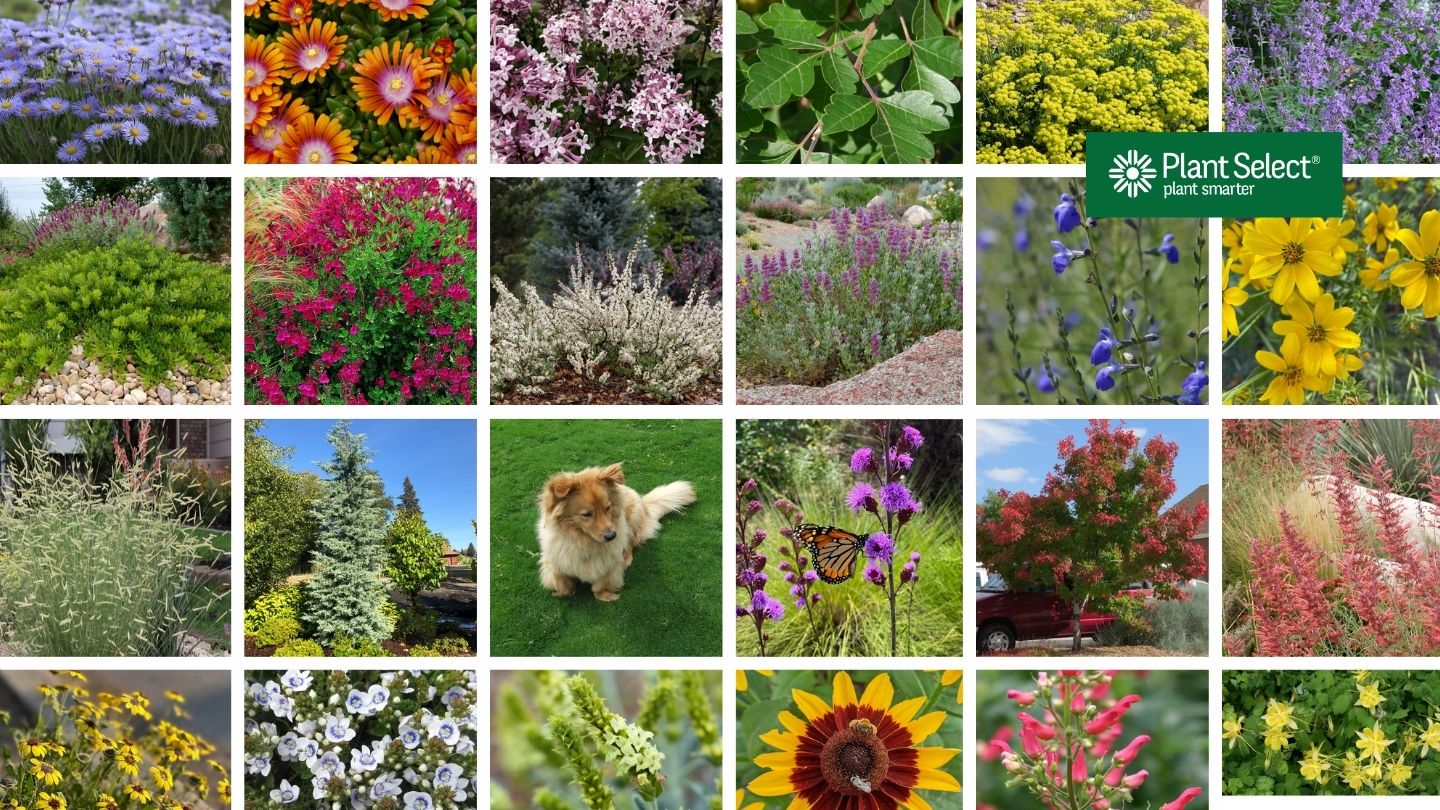
Think that low-water plants have to look drab or weedy? Not these days!
If you’re looking for options to replace a thirsty traditional lawn, you can find a wide variety of attractive and colorful plants for heat and drought, including:
- Warm-season turf grasses like Dog Tuff grass and native grasses like buffalo grass. These grasses use a lot less water than traditional turf grasses. You can still have a lawn… but with a grass that thrives in tough conditions.
- Drought-tolerant perennials
- Low-water shrubs
- Waterwise ornamental grasses
- Climate-resilient trees
Worth noting… Plant Select is focusing on climate-resilient trees in its research and multi-year plant trials. We’re also rolling out a new, tree procurement solution called Conversation Plant Network for organizations with large-scale plant needs, like municipalities, universities, and botanic gardens.
Let’s skip the whole “turning-landscapes-into-nothing-but-rocks” phase and go straight to smarter, healthier landscapes for drought!
Related articles that may interest you:
- Localscapes: How Utah is building buy-in for waterwise landscapes
- 3 places in landscapes that are ideal for waterwise plants
- 3 big problems with zeroscapes (landscapes with minimal to no vegetation)
- Why plants are important, even during drought