Why Plants Are Important in Our Landscapes, Even During Drought
June 23rd, 2026
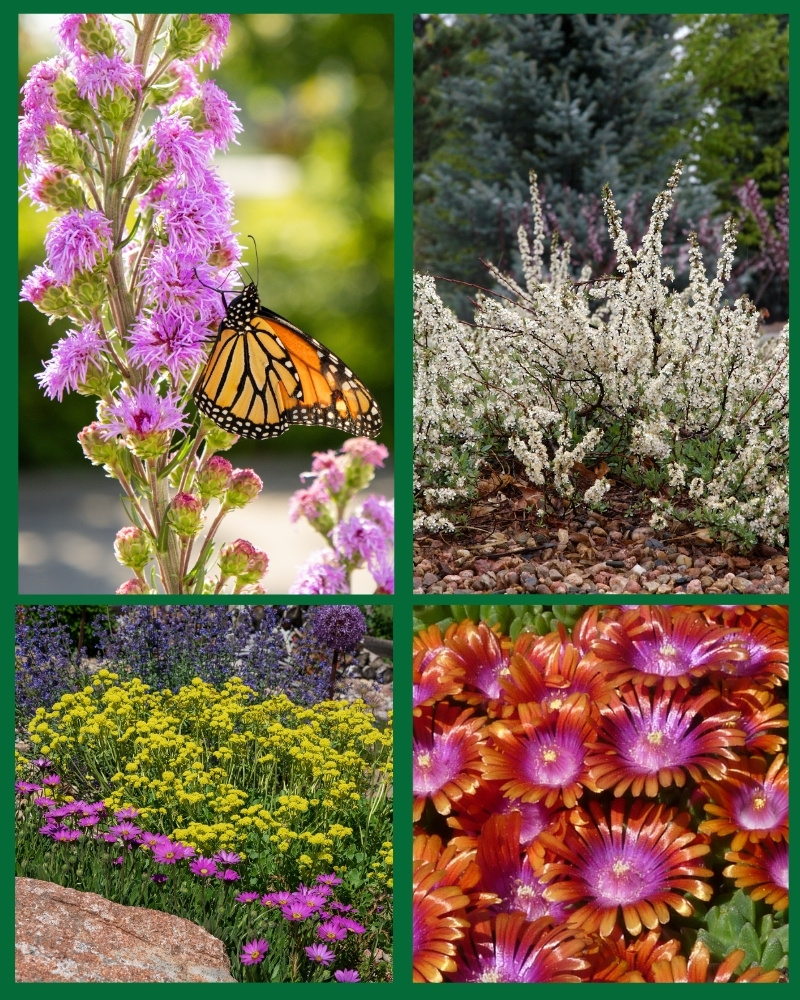
Step outside your front door into a lush, waterwise landscape and breathe in. Feeling calmer? Check! Is your home value higher? Check! Is your home staying cooler? Check!
Here are many ways that vegetative landscapes make a positive impact on our lives.
First, a big one…
Vegetation reduces the “urban heat island” effect
One of many reasons to replace traditional lawns with other vegetation (rather than rocks or artificial turf) is to offset the urban heat island effect.
This is a phenomenon in which communities that have dark, hard surfaces (like roads and buildings) and heat-emitting devices (like cars and air conditioning units) can experience mid-afternoon temperatures that are up to 15 to 20 degrees warmer than surrounding rural areas with abundant vegetation.1
Studies show that urban heat islands intensify extreme heat events during summer. They also can negatively affect the physiological and mental health of those who live in those environments.2
Yes, heat can get us down and affect our quality of life.
It’s worth noting that more than four out of five Americans live in an urban or suburban area.3
Luckily, vegetation helps to counteract the urban heat island effect. Trees and other plants cool urban climates through two methods4:
- Shade. When plants cast shade, they reduce the surface temperatures below them, such as on buildings and roads. In turn, these cooler surfaces don’t transmit as much heat.
- Evapotranspiration. Think of evapotranspiration as natural air conditioning. Plants absorb water through their roots, pulling it up their stems and into the leaves. Water exits plants as a vapor through the leaves, cooling the air around the plants.
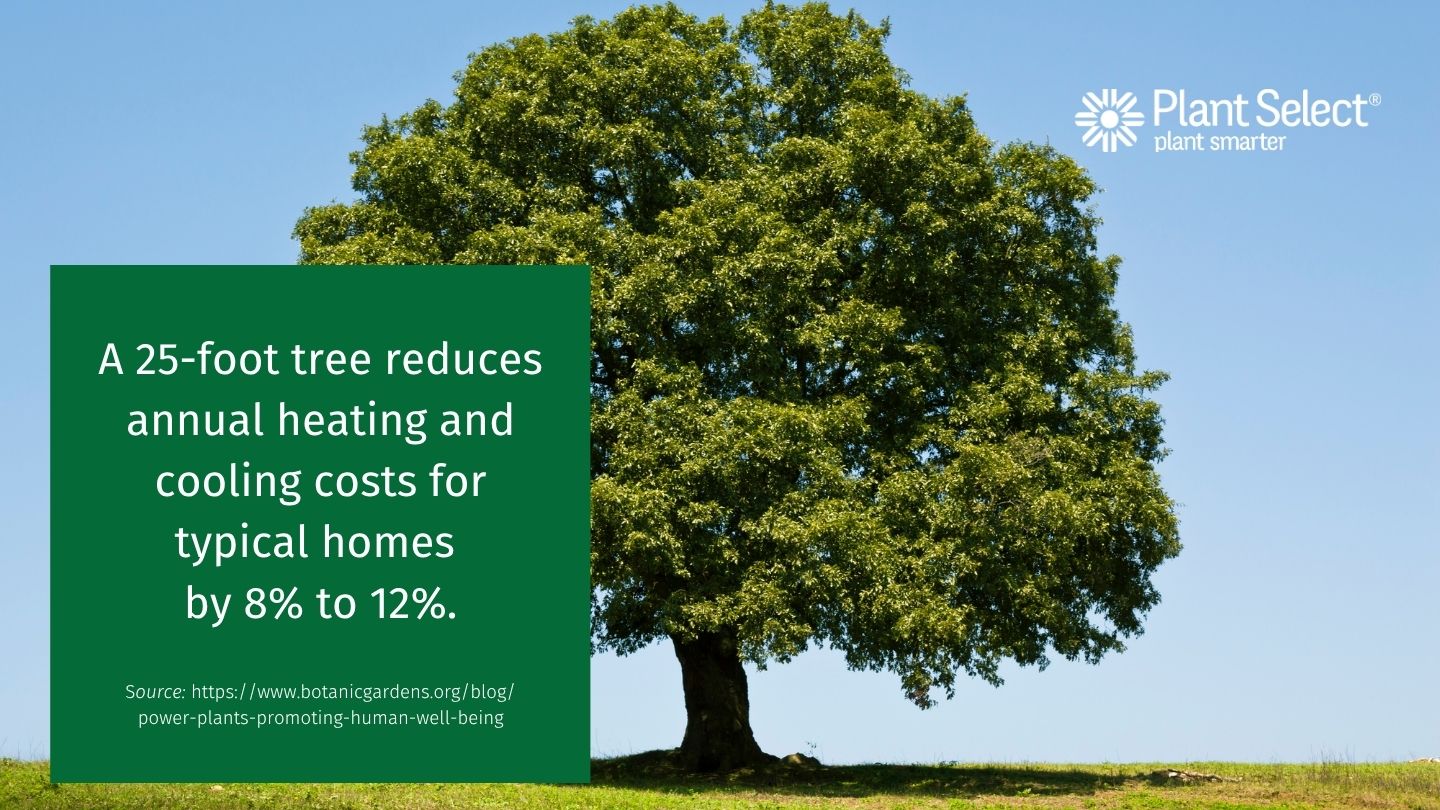
It’s estimated that a 25-foot tree reduces annual heating and cooling costs for typical homes by 8% to 12%.5
Reducing heat is just one of the MANY benefits of vegetation
Studies show that landscapes with trees and other types of vegetation offer benefits to human well-being, the environment, and our economy too. Those benefits include:5,6,7:
Human health and well-being
- Boosting happiness and life satisfaction
- Increasing creativity and productivity
- Lowering stress, anxiety and depression
- Lowering blood pressure
- Improving sleep quality
- Improving rehabilitation and speeding healing
Environmental benefits
- Supporting biodiversity (offering food and habitat for wildlife and pollinators)
- Improving air quality
- Reducing air temperatures
- Sequestering carbon, removing it from the atmosphere
- Reducing storm water run-off (by absorbing extra water)
- Reducing greenhouse gas emissions and air pollution
- Improving water quality by filtering pollutants
- Lowering noise pollution
Economic benefits
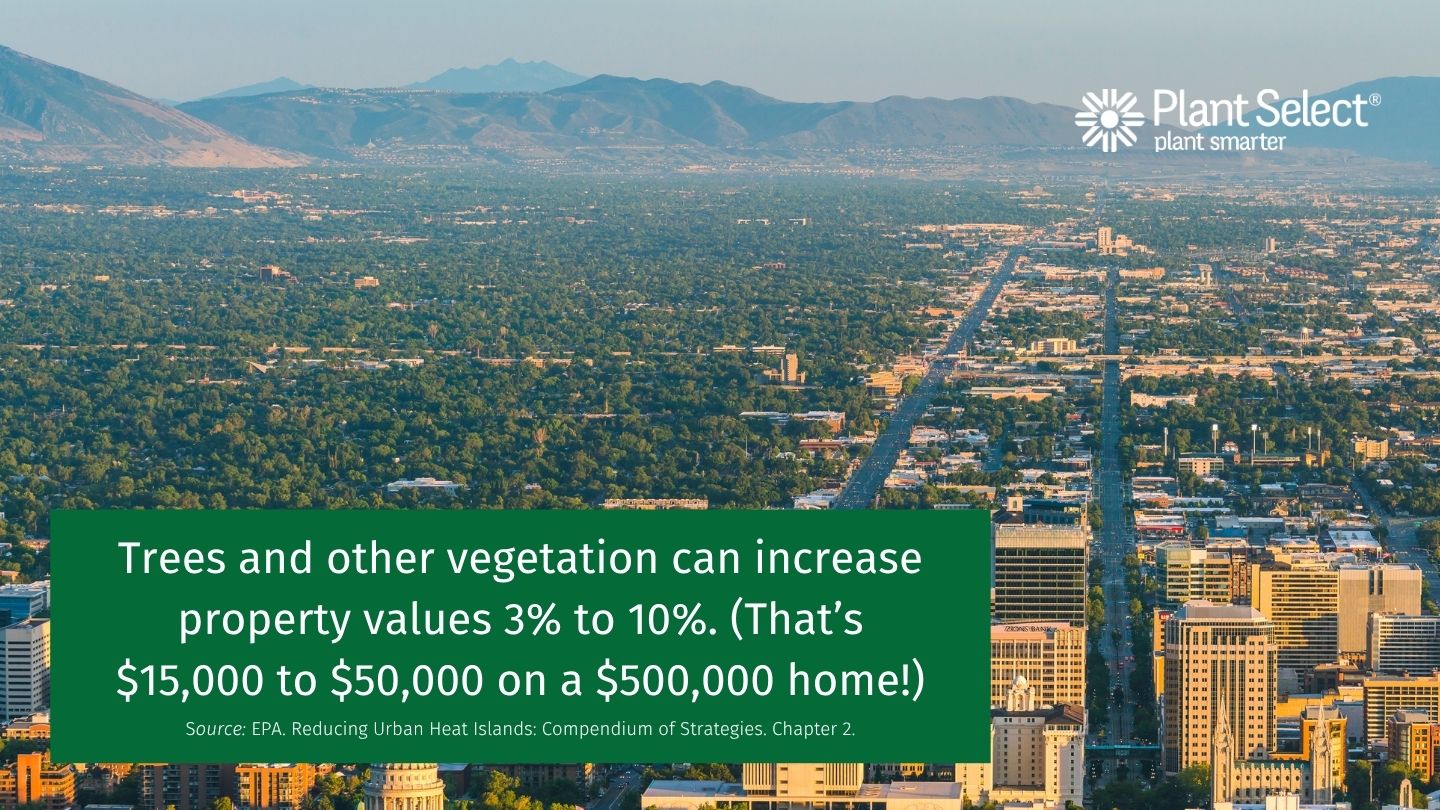
- Increasing property values an average of 3% to 10%
- Increasing the prosperity of commercial shopping centers (such as through longer customer visits)
- Lowering health care costs (through improved human health)
- Reducing road deterioration (through shade), lowering pavement costs by up to 60%
- Reducing energy use
And more!
Removing all plants is not the answer to drought
Here are two better solutions >
Let’s skip the whole “turning-landscapes-into-nothing-but-rocks” phase and go straight to smarter, healthier landscapes for drought!
Related articles that may interest you:
- 3 big problems with zeroscapes (landscapes with minimal vegetation)
- 2 ways to create a smarter landscape for drought
- Localscapes: How Utah is building buy-in for waterwise landscapes
- 3 places in landscapes that are ideal for waterwise plants
Sources:
1 National Integrated Heat Health Information System (NIHHIS). https://heat.gov/urban-heat-islands
2 Amaripadath, D. & Sailor, D.J. (2025) Systematic review on cooling benefits of landscape strategies for urban thermal environments in the United States. Sustainable Cities and Society 129 (2025) 106497.
3 U.S. Census Bureau. 2010 Census Urban Areas FAQs. https://www.census.gov/programs-surveys/geography/about/faq/2010-urban-area-faq.html
4 U.S. Environmental Protection Agency. 2008. Reducing urban heat islands: Compendium of strategies. https://www.epa.gov/heat-islands/heat-island-compendium.
5 Krishnan, S. of Denver Botanic Gardens. (March 25, 2020) The Power of Plants in Promoting Human Well Being. https://www.botanicgardens.org/blog/power-plants-promoting-human-well-being
6 U.S. Environmental Protection Agency. Updated March 2026. Benefits of Trees and Vegetation. https://www.epa.gov/heatislands/benefits-trees-and-vegetation
7 U.S. Environmental Protection Agency. May 2017. Reducing urban heat islands: Chapter 2: Trees and vegetation. https://www.epa.gov/sites/default/files/2017-05/documents/reducing_urban_heat_islands_ch_2.pdf