3 Big Problems With “Zeroscapes”
June 23rd, 2026
Extreme drought conditions can drive people to do extreme things
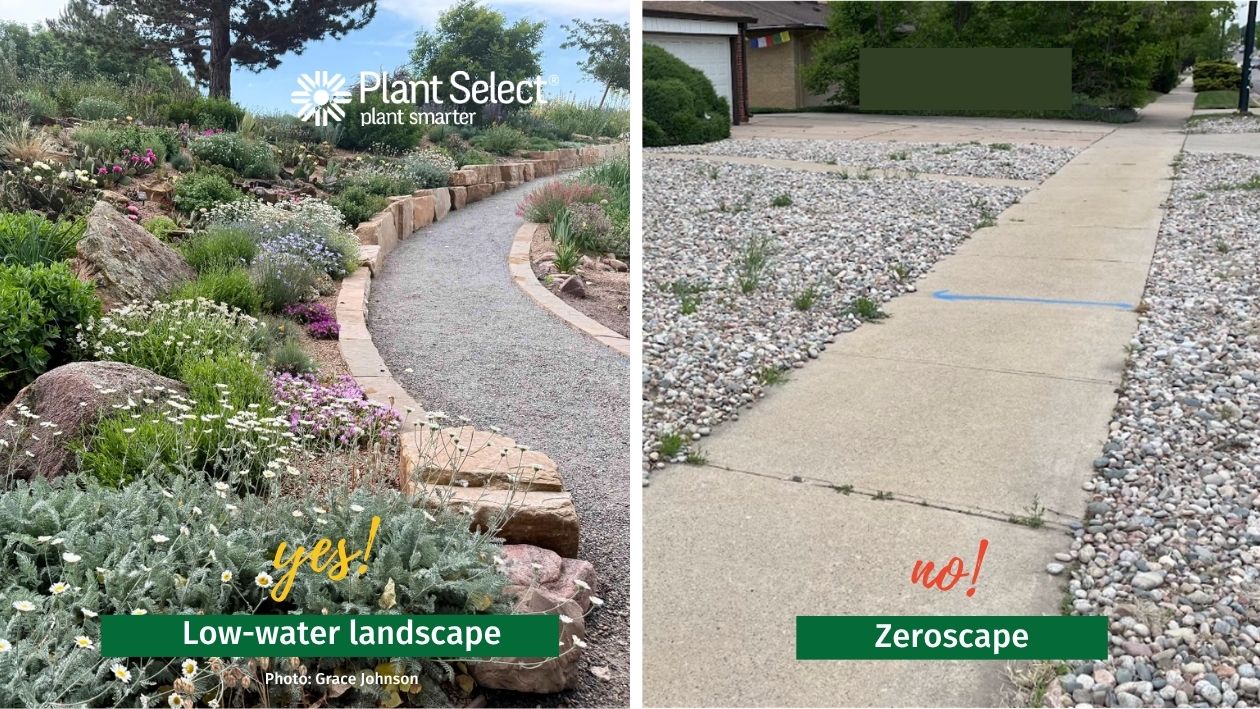
Along the Front Range of Colorado, we’ve been noticing homeowners ripping out their traditional lawns and landscaping, and replacing them with barren yards of rocks (“zeroscapes”) or artificial turf.
Homeowners and businesses may have good intentions. Technically, these landscapes probably use less water.
However…
Creating a landscape with minimal plants creates a wide range of other problems
Just to name a few:
#1: Zeroscapes threaten the health of nearby trees
Trees offer a wide range of benefits in our urban and suburban environments.
For example, they provide shade and act as natural air conditioners through a process known as “evapotranspiration”. They have a cooling effect on streets and buildings.
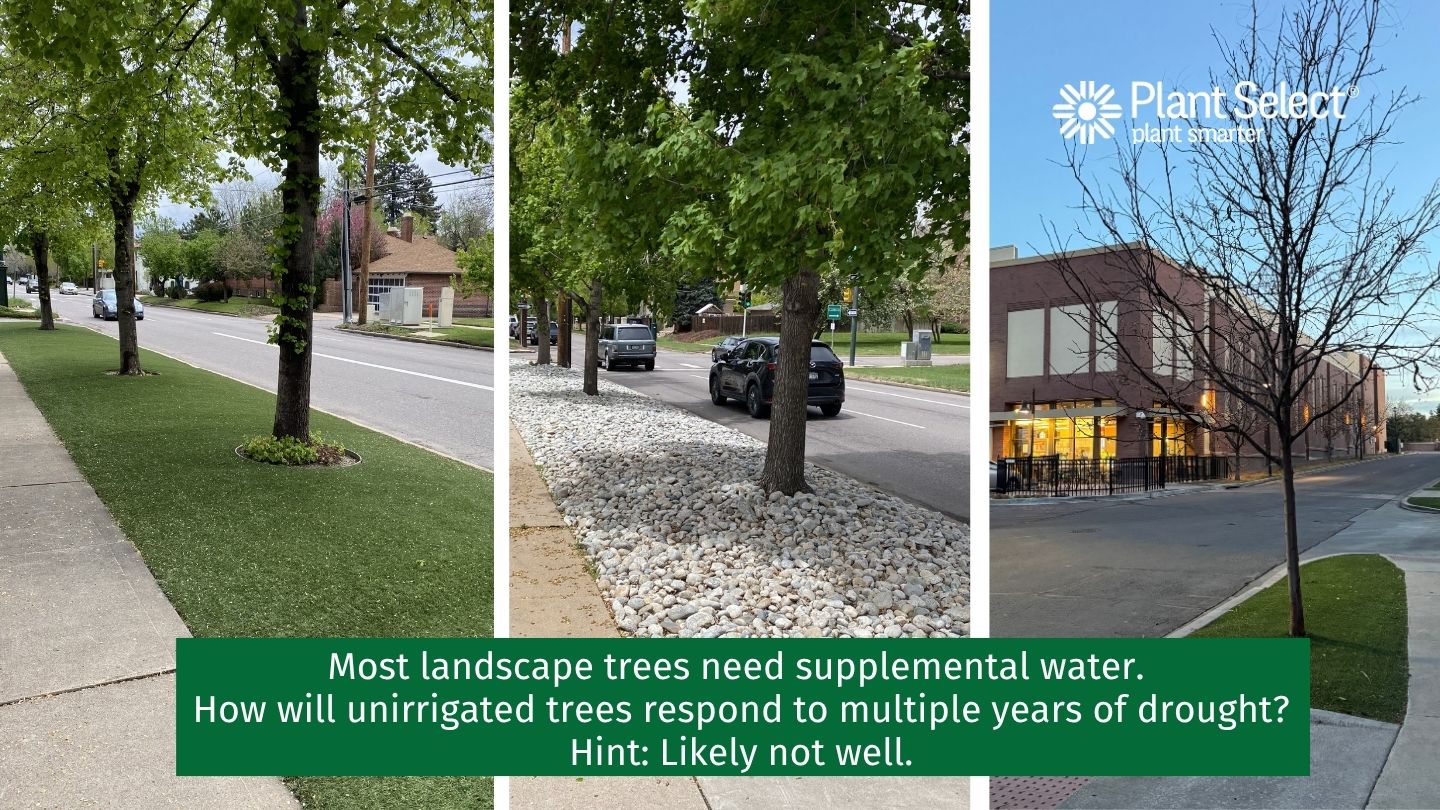
The majority of landscape trees in the Intermountain West are not xeric. This means they need some supplemental irrigation to survive, particularly around their “drip line”—the area below the outermost extension of their branches. This is the zone in which a tree’s “feeder roots” eagerly absorb water.
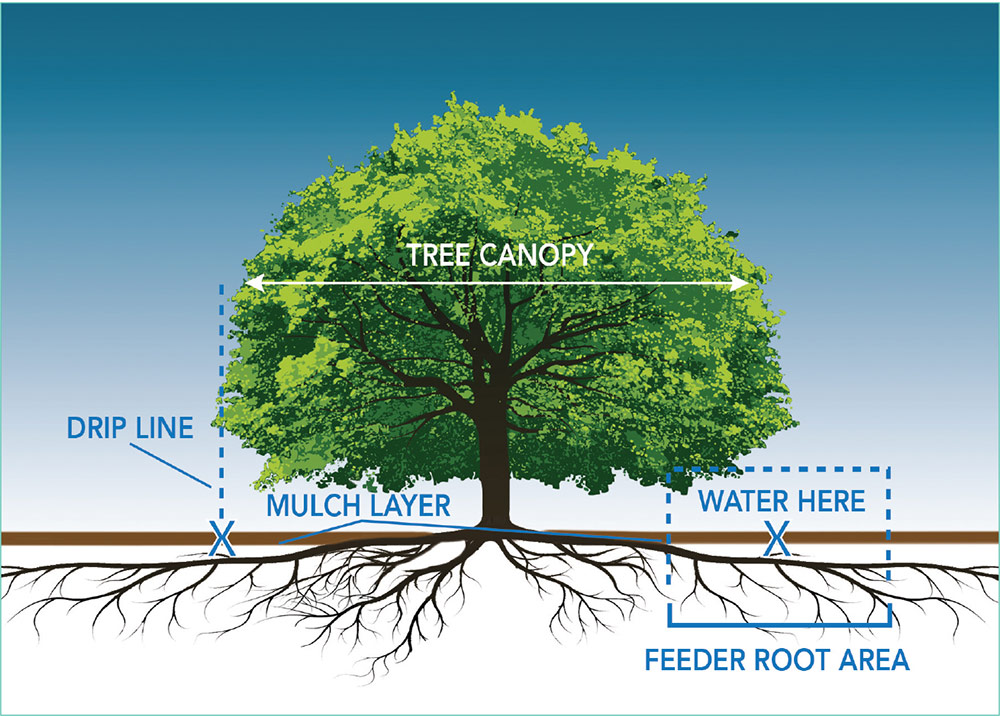
Image courtesy of Denver Water
If trees don’t receive the moisture they need, they become more vulnerable to disease, insects, and die back.
When we see trees planted in cobble, rocks, or artificial turf, we can’t help but wonder, “How are these trees getting supplemental water? If these trees aren’t getting irrigated, how will they weather multiple years of drought?”
The answer: Likely not well.
#2: Zeroscapes inevitably lead to weed pressure… yes, even with landscape fabric
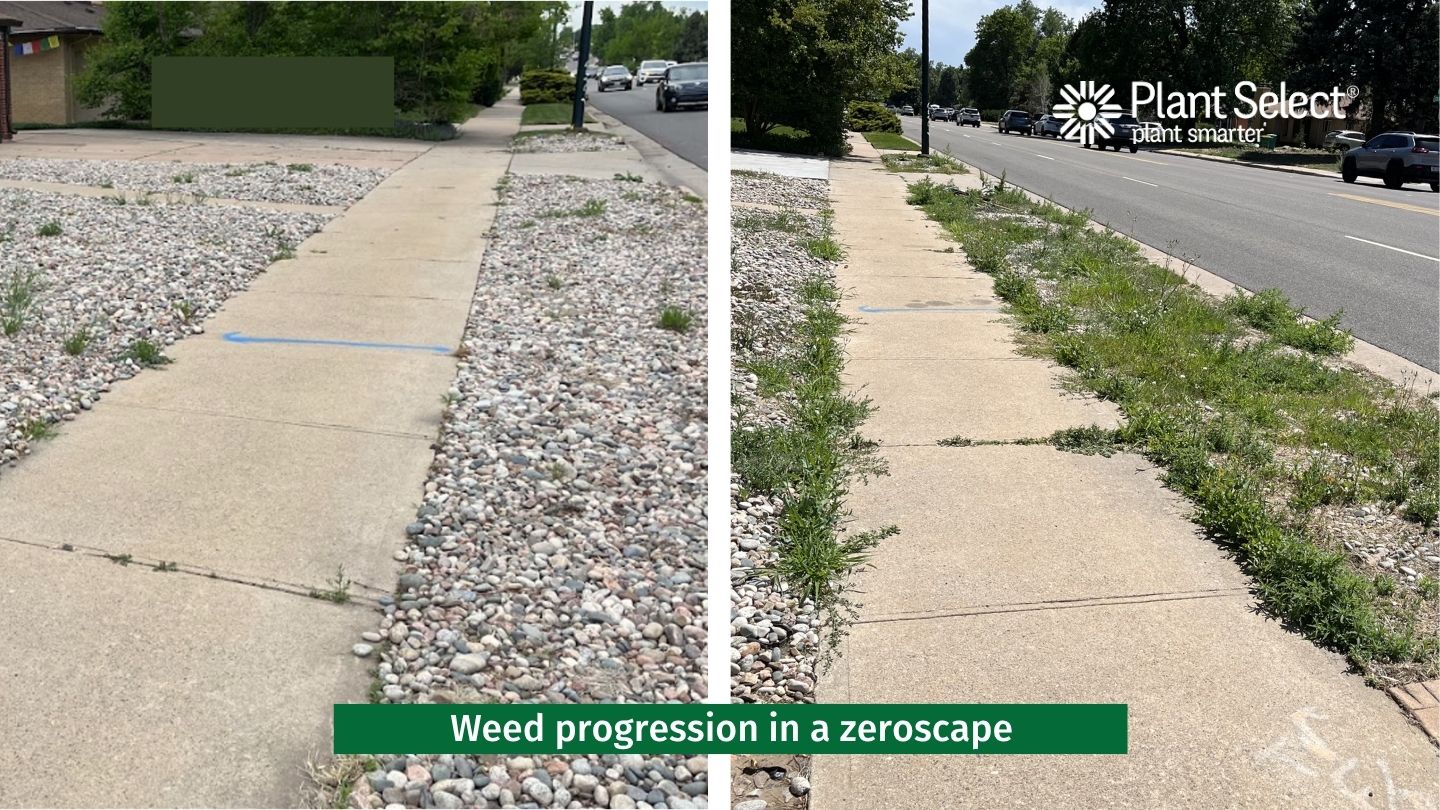
A zeroscape is not a no-maintenance or a low-maintenance yard. It’s a deferred maintenance yard, meaning initially you may not have many tasks… but when the weeds move in, it becomes another story.
Mother Nature does not like blank spaces.
Weeds have a way of entering barren landscapes. Weed seeds can spread in a variety of ways, including wind and water.
When weed seeds germinate and begin to grow above landscape fabric, those weeds can be extremely difficult to pull. And if weeds aren’t dealt with quickly, they can grow exponentially worse each year. That’s because many weeds cast an enormous amount of seeds (thousands of seeds), and many of those seeds can remain viable for years.
At some point, zeroscapes are going to experience weed pressure and require a lot of work and input, whether that’s physical labor removing weeds or herbicide use. Often, it’s a combination of the two.
Having established landscape plants helps offset weed pressure (as does having a three-inch layer of wood mulch).
#3: Zeroscapes don’t have the cooling power of vegetation
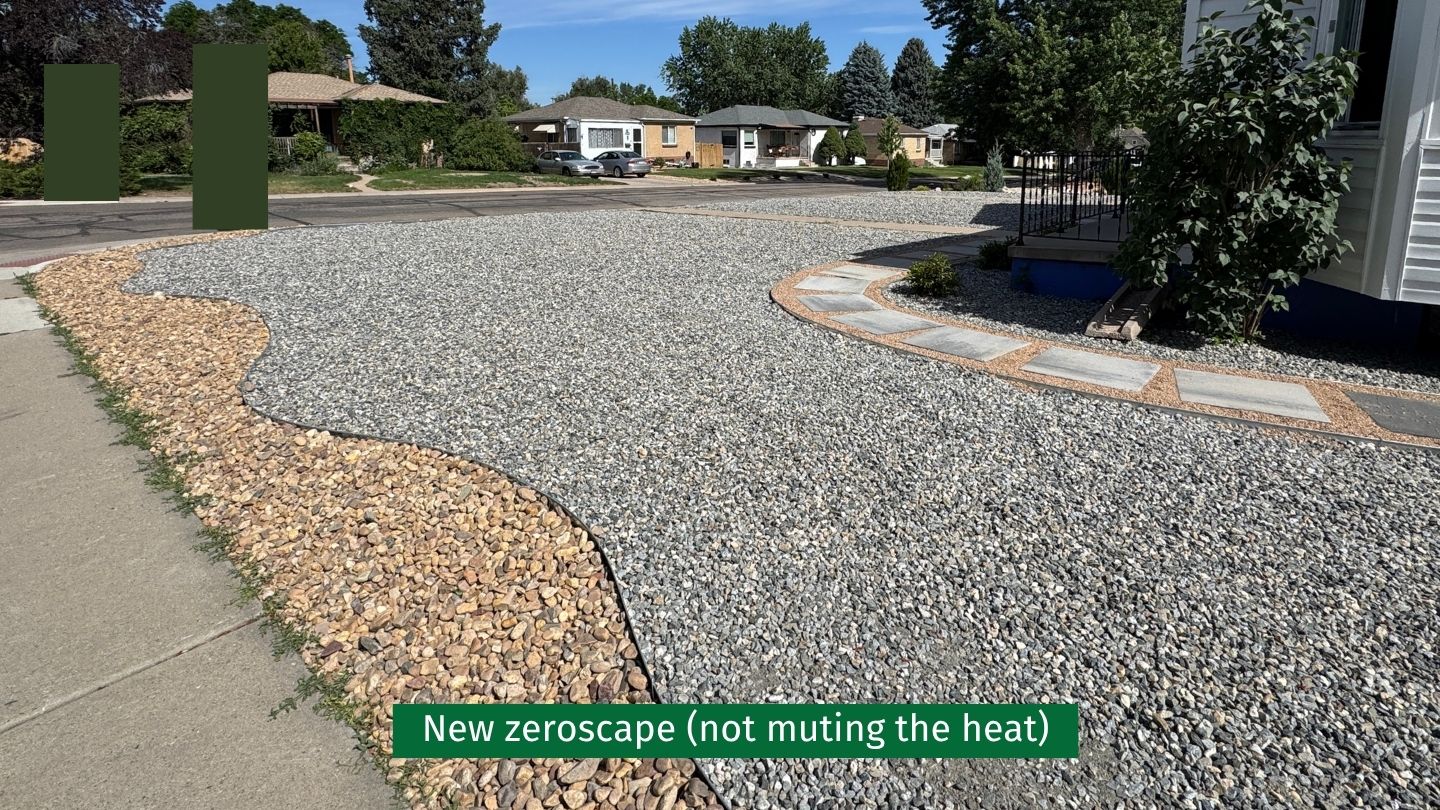
Urban and suburban environments often suffer from the urban heat island effect.
This is a phenomenon in which cities and towns that have dark, hard surfaces (like roads and buildings) and heat-emitting devices (like cars and air conditioning units) can experience mid-afternoon temperatures that are up to 15 to 20 degrees warmer than surrounding rural areas with abundant vegetation.
Plants are one of the best ways to help lower temperatures in urban heat islands!
Trees and other vegetation help cool urban climates, in addition to offering many other benefits.
When vegetation disappears, more energy is needed to cool surrounding homes and buildings. You may be lowering your irrigation bill, but are you increasing your energy bill because you’re running your air conditioner more frequently?
Plants are important… just ask Las Vegas
Let’s say you live in one of the hottest and driest cities in the country: Las Vegas. You want to remove a thirsty traditional lawn, so you look into Southern Nevada Water Authority’s Water Smart Landscape incentive program.
Can you switch to a yard full of rocks? Nope.
Southern Nevada has learned that plants are essential, even in their extreme climate.
To qualify for the Southern Nevada lawn removal incentive program as of June 2026, you must replace your lawn with trees and plants (preferably water-efficient ones). The plants must cover at least 50 percent of your former lawn area when mature, and your vegetation needs to be drip irrigated.
The solution to drought isn’t removing all vegetation from landscapes
Here’s why plants are critically important, even during drought >
Here are two better landscape approaches for drought >
Let’s skip the whole “turning-landscapes-into-nothing-but-rocks” phase and go straight to smarter, healthier landscapes for drought!
Related articles that may interest you:
- Localscapes: How Utah is building buy-in for waterwise landscapes
- 3 places in landscapes that are ideal for waterwise plants